
As the leaves finish falling and we begin to inevitably reflect on 2023’s biggest musical moments and stories, there’s no doubt that Taylor Swift’s epic Eras trek, now both a touring and box office record-breaker, will rank among one of the most iconic. Her reign as the music world’s undeniable epicenter seems to know no bounds or expiration date, and her rabid appeal–once limited to a very set, but gigantic youthful demographic–has expanded to the kind of rarified, universal heights that have always been reserved for the most quintessential performing artists. And folks, as much as you may want to deny it or seem surprised by this obvious fact, she’s been a leading part of that class for well over a decade now.
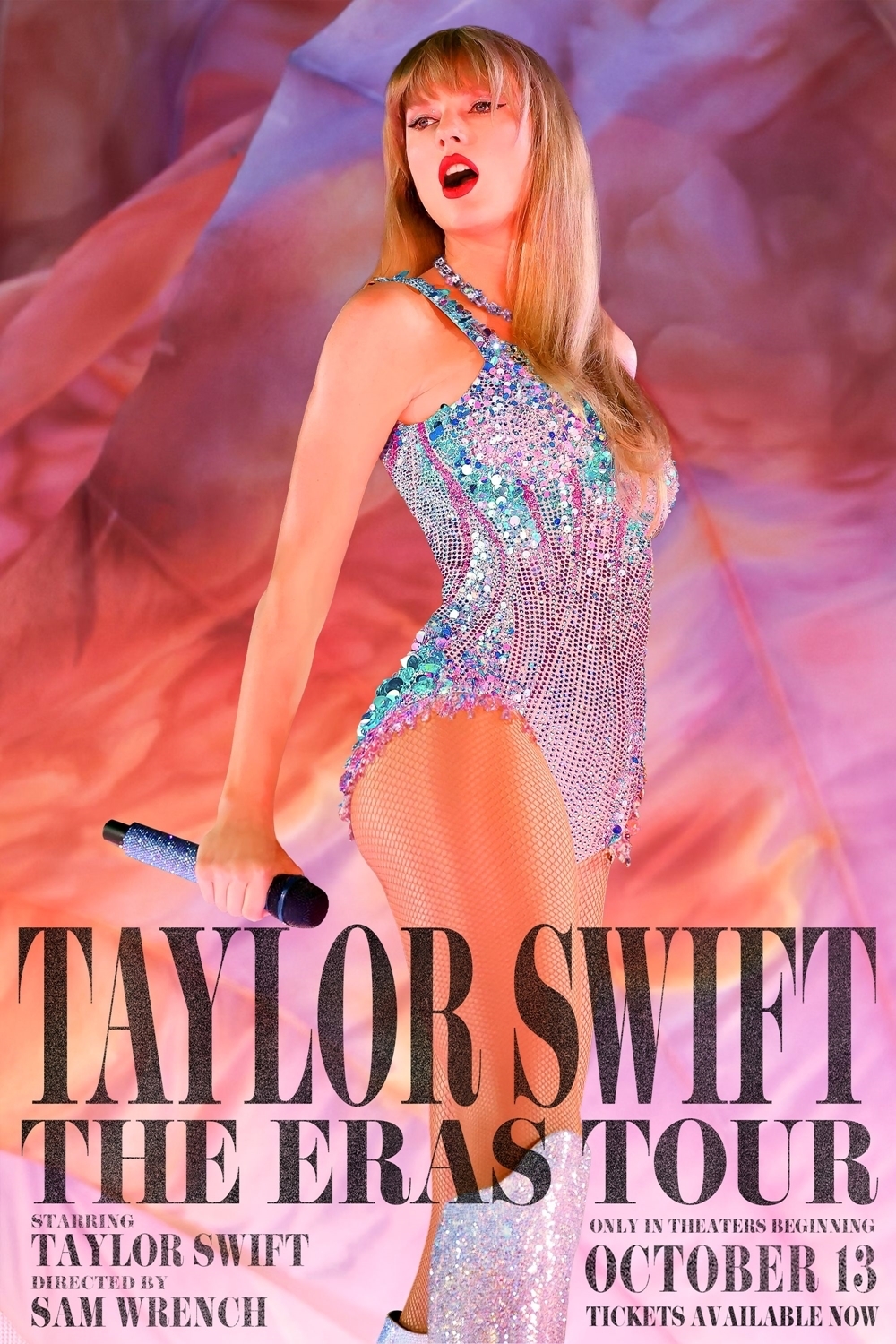
I was fortunate enough to attend one of the Chicago dates of the Eras summer leg, and was finally able to catch a viewing of the film this past weekend as well. I should be very clear that my participation in these events was not merely due to my hobby of following and covering popular music. I was there 100% unapologetically as a passionate fan of Taylor Swift’s music, period. Truth be told, it was sort of the “coming-out” party in my evolution as a true “Swiftie” that had been building for some time now. My dedication to her music had grown considerably over the course of the 2010s, and reached a new peak with her pair of excellent pandemic albums in 2020. There’s been no turning back since that point, and it was really all leading to Soldier Field on June 4, 2023.
I’ve had the good fortune of experiencing an extensive amount of live music in my life, and there’s no doubt that the Eras show easily ranks among the very best shows I’ve attended. Taylor and her team’s delivery of the music was beyond stellar. Her growth as a vocalist and stage performer have evolved marvelously over the years, and have long ago caught up to her always remarkable gifts as a lyricist and storyteller, which have also only continued to get better with age. I was blown away by her mature confidence and suave stage presence, as well as the vivid and visual integration of live-theatre elements and big box office production. It was, to put it mildly, every bit the spectacle it was promised to be.
But this was an experience far beyond just the music. As I soaked in the perfect summer evening and took in the moment of it all amongst the tens of thousands of fans, I couldn’t help but reflect upon what a pivotal pop-culture movement we were all experiencing together. This was the biggest of stadium concerts we could be possibly attending. Yet, the connection that this performer drew between all of us in attendance often made it feel as intimate as any small theatre show I have witnessed. It was such a tremendous dichotomy that speaks to her unique reach and ability as a performer. And again, this was not just a crowd of screaming adolescent girls filling the seats and singing along (OK, maybe the film showing I attended happened to resemble a 4th grade field trip, but I digress). Her audience today captures a wide and unified scope: young and old, men and women, straight and gay, a multitude of races and origins, etc., etc. We were all there together, screaming every word. I attended with a great friend of mine who, being fourteen years my junior, came of age to this music and obviously connected with it in a different way than I could. But, while I certainly wasn’t able to match his lyrical accuracy per se, I was still singing along ever devotedly. Connection to her music is not limited to any background, generation, or life experience.
Which leads me down a whole other road of reflection: my own winding road to Taylor Swift fandom altogether. As I’m sure it was for many in attendance on this tour, it was not a linear evolution, and not one I necessarily expected. As a still-passionate fan of mainstream country in the mid-2000s, I remember Taylor’s arrival on the music scene very vividly. I remember sitting in my post-college apartment listening to her 2006 single, “Tim McGraw”, and the accompanying self-titled debut for the first time. And I’ll admit, I wasn’t overly appreciative of her music in those early days. While I recognized her promising songwriting talents, I was one of many who prematurely dismissed her as a flash-in-the-pan teen act, and questioned her overall singing abilities as well. As I became further disillusioned with the direction of the mainstream country format, I even blamed her and her pop-leaning, adolescent-themed records as part of the problem. This was incredibly hypocritical of me, given my vehement defense of performers like Shania Twain against similar criticisms a decade prior, not to mention my disgust with the industry’s ageist view of veteran acts on the opposite side of the age spectrum of Swift. These dismissals on the part of myself and others obviously proved to be incorrect and futile, not to mention significantly ironic, years later.
In the years that followed, my tastes and open-mindedness as a music listener continued to expand, and so did Taylor Swift’s reach across the overall music universe. Not only did she prove herself not to be a teenaged fad, but she emerged as one of the most successful acts in a generation. During that time, I went through many phases with her music: from ignorance and skepticism, to reluctance and guilty-pleasure acceptance, to full-blown conversion and appreciation. Helping grow my appreciation along the way, in addition to her undeniable talent, was both her gracefully reverent transition from the country to pop scenes during the promotion of 1989, as well as her humanistic navigation of political and social issues with defiant calls for inclusion and ally-ship.
In many ways, I was able to think back on some of those phases in conjunction with the various eras of the concert and film as they both progressed. And as I found myself belting shamelessly to every era, whether it was to breezy bops like “Our Song”, “You Belong With Me” and “We Are Never Ever Getting Back Together”, or to truly significant moments of greatness like “Champagne Problems”, “Tolerate It” and “All Too Well”, I came to the conclusion that maybe I really was a subconscious fan all along. Because every moment here felt like a joyous jolt of nostalgia to me. Whether it was of the rose-colored or unabashed variety really didn’t matter in the end.
As much of a blow as the COVID-19 pandemic was for the live music world, it’s beautifully poignant to realize that this tour proved to be one of that event’s greatest gifts. With Swift unable to tour behind the trio of albums promoted during that time, the world forced her hand to conceptualize a show spanning all ten of her fascinating album eras. This format provided tremendous display to the truly impressive scope of her catalog, spanning sounds of pop, country, acoustic folk, Hip-Hop, dance, and R&B. I’m certainly not making any blasphemous suggestion that Swift’s artistic arc is on par with that of The Beatles, but there certainly are similarities when following her early ear-worms through the more sophisticated narratives and production choices of her catalog’s later moments. Her evolution has certainly been momentous.
One direct line of pop lineage that can definitely be drawn between her and that of the Beatles, as well as movements by artists like Elvis Presley before them, or Michael Jackson or Garth Brooks afterwards, is the sheer popularity she now commands on a global scale. If the continued historic success of Taylor Swift, and the Eras tour in general suggests anything, it’s that we are most definitely living in the midst of Taylormania. And, it’s as significant a pop culture touchstone to the current moment as Beatlemania was to the 1960s. I want to be clear that I’m merely comparing popularity and reach in a given generation in that statement, but that there should be absolutely no doubting that Swift backs it up with an indisputably tremendous catalog. It’s going to be incredibly interesting to see what her next career moves prove to be as her legacy grows in the years and decades ahead.
Eras is unquestionably the defining pop-culture moment of 2023, but it’s not just because of its stats. Its foundation and significance is as a showcase of the pure fun, joy, and inspiration to be found in great pop music. The entire experience spoke directly to my heart as an unadulterated music fan, and I’m very grateful to have been a part of it.
 The 706