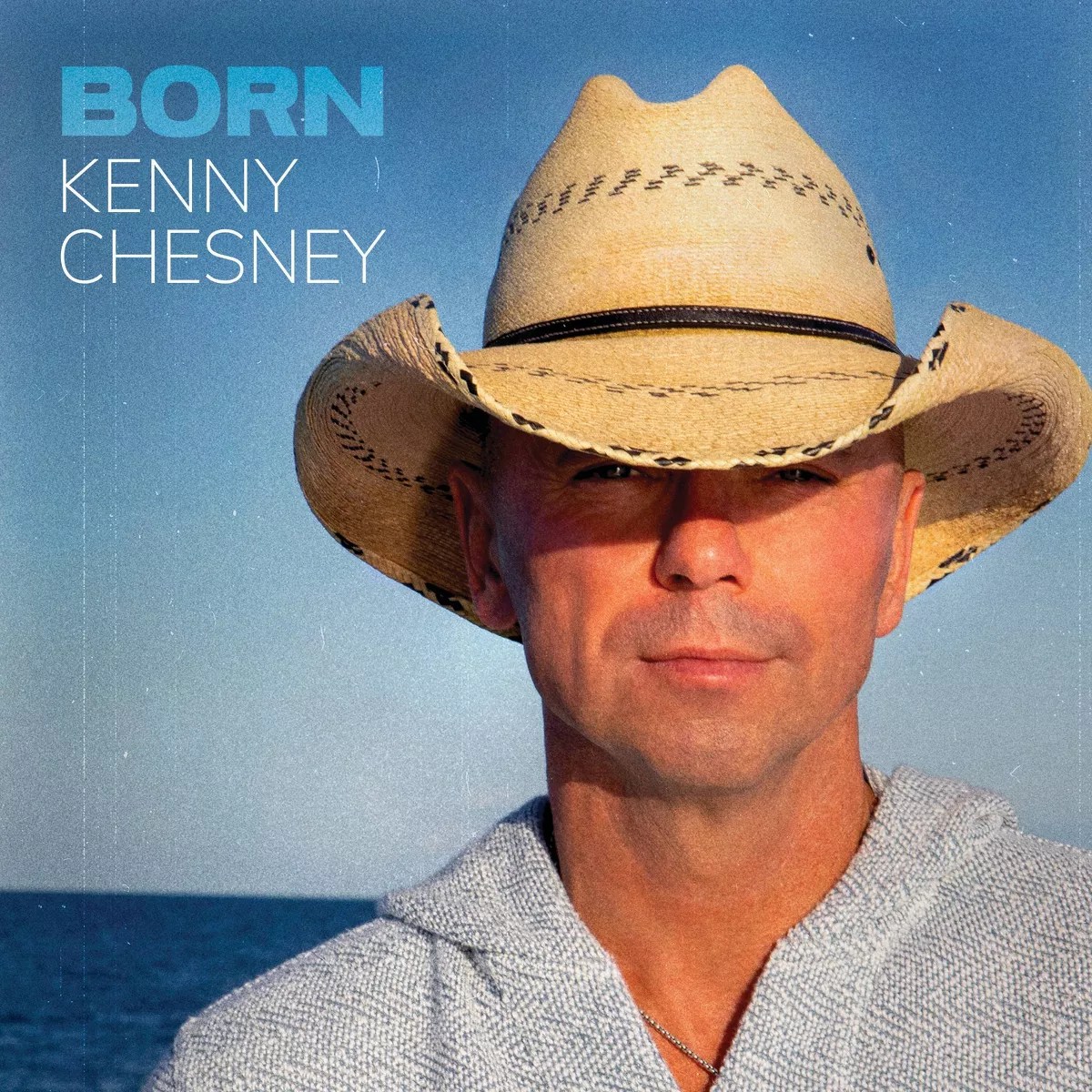
Kenny Chesney- Born (Warner)
Kenny Chesney has spent the better part of three decades as one of mainstream country’s most consistently active recording artists and of course, for the latter two-thirds of that stretch, as one of American music’s biggest box-office touring attractions. As his twentieth studio release, Born is yet another in an endless string of albums that stays loyal to the formula that has afforded him that impressive and elusive longevity. In other words, its ever-faithful to the brand of 2000s-era, sun-kissed and stadium-ready country-pop that he and long-time producer Buddy Cannon have been mining from since the back-half of the Clinton administration. It offers your standard Chesney track-list: assorting anthemic bops of both the breezy and rocking variety with tender romance and wistful nostalgia. They’re also sounds that suddenly resonate with an alarmingly retro and refreshing tone on today’s country dial. It’s also worth nothing that the singer remains as vocally warm and solid as ever-before, a feat in itself given his prolific profile on the road. Occasionally, KC’s been known to slip in a singular great song that elevates and discerns an album from the rest of his discography (see “Anything But Mine” on When the Sun Goes Down, “Who You’d Be Today on The Road and the Radio, “You and Tequila” on Hemingway’s Whiskey, et. al.) Alas, there is not a moment with such immediacy and elevated gravitas to be found on Born, though “Wherever You Are Tonight” comes closest. This ultimately relegates its status to merely that of another round of reliable, ever-digestible boombox listening. It’s not groundbreaking or artistically compelling. But it is a musical realm that will always be integral to the overall popular music experience. And in that regard, Born solidifies that Chesney is still one of our most consistent curators.
Gary Clark Jr. – JPEG Raw (Warner)
On his fourth studio LP, the latter day guitar hero expands his bluesy rock palette into new territory that incorporates a soulful blend of everything from traditional African sounds and trippy Hip-Hop, to silky jazz and the cosmic blue-rock overtones that have defined his rapturous sound from the get-go. It all coalesces into an organically vibrant soundscape that is both kaleidoscopic and aesthetically coherent all at once. Unifying all of this into its own singular sonic identity is the double-punch of Clark’s equally virtuosic vocal and guitar mastery, both of which can perfect modern Kravitz swagger, vintage Stevie Ray-recalling dexterity, golden Marvin-meets-Miles ambience, and progressive Kendrick-leaning genre melding in one thunderously delicious swoop. Meanwhile, thrilling guest-turns from the likes of Valerie June, Keyon Harrold, George Clinton, and especially Stevie Wonder on the thrillingly funky protest of ‘What About the Children”, elevate the magnitude and scope of the music in gorgeously varied fashion. Like so many pillars from the storied golden rock era of the late sixties and early seventies, this record has style, passion, and purpose. It’s a deeply bold artistic statement that feels like the significant climax that the opening arc of Gary Clark Jr.’s career has been beautifully building to for the past dozen years. The upcoming Beyonce record is deservedly receiving praise for its part in reclaiming for black artists their rightful place in the country music story. JPEG Raw similarly celebrates the contributions of black-led musical movements and their role in the overall American music lexicon, while also fearlessly pushing them forward. This album is a whip-lashing, thoughtful, and soulfully beautiful journey through a vast well of cultural influences, while demonstrating the limitless ability of music to unite them all in one profound, artistic statement.
Norah Jones- Visions (Blue Note)
In the general pop pantheon, Norah Jones will always be defined as the lush and elegantly jazzy songbird who became an unlikely, out-of-the-gate millennium superstar with her classic debut album, 2002’s Come Away With Me. That image of Grammy Awards overflowing from her petite, 23-year-old arms at the 2003 ceremony is forever etched into the annals of Y2K-era pop-culture. The Norah-loyalists that have stuck with her over the following two decades are obviously well-aware of her adventurous stylistic nature, genre-hopping side-projects, and ultimately underrated range. With that all said, Visions cannot help but feel like the scrappiest swerve of her proper solo discography to date. She and producer Leon Michels (Sharon Jones & the Dap-Kings) don’t overthink the proceedings here, favoring loose and rustic arrangements rather than the lush polish of past recordings. While her previous albums would transport you visually to an artsy concert hall or bougie jazz lounge, Visions evokes images of Jones singing at a charmingly rickety piano, tucked in the corner of a smokey, underground jazz club. Her ever-exquisite pipes are accompanied by restrained keys, gruff and grimy fuzz-guitar, and little more, outside of a trumpet here and there. It paints her lovely lilt in a remarkably surface-level light, at times joyously recalling the trappings of 2013’s Foreverly with Billie Joe Armstrong. This atmosphere sets the stage for some of the most hauntingly gritty moments of her exalted catalog, and only further heightens the rare beauty of one of our time’s definitive voices. Visions is a raw, slinky little gem from one of the preeminent musical treasures of a generation, whose rich, post-debut body of work is prime for further widespread discovery.
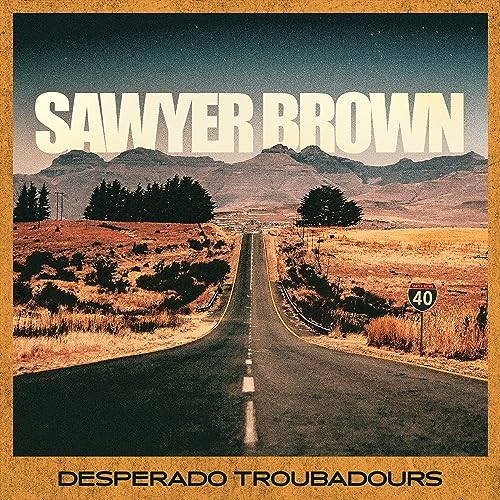
Sawyer Brown- Desperado Troubadours (Curb)
At their peak during country music’s legendary 90s boom, Sawyer Brown was at the tippy-top of the genre’s B-list of hitmakers. And in terms of live show street-cred, their concerts were regarded in the same energetic league as superstars like Garth, Reba, Shania, The Chicks and Brooks & Dunn. This, their first album since 2011, reunites them as they commemorate the 40th anniversary of their Star Search-fueled breakthrough. Produced by Blake Shelton, the set sounds straight out of the top ten of a 1996 edition of the Billboard country charts; perfectly timed for the ongoing nostalgia craze for all things 1990s. Lead vocalist Mark Miller and his signature charisma remain in solid vocal form after all of these years, and the same can be said for the rest of the band, particularly when it’s time for a guitar, fiddle or mandolin solo (“Goodnight and Good Morning” and “This Side of the Sky” are the best of the lot in both regards). The album is indeed pleasant, competent, and comforting. The novelty of hearing Miller and company sing anything new again is admittedly worth most of the price of admission on its own. Undeniably however, the record never really elevates to that next gear, primarily due to a rather middle-of-the-road collection of songs. In keeping with the retro-90s vibes, the entire track list very much resembles filler tracks from a Nashville album of that era, which is certainly among the best filler of any kind. But, Desperado Troubadours does leave one wanting for at least one cut on the level of a classic like “The Walk”, “All These Years”, “Cafe on the Corner” or even “Thank God For You”. Without it, it doesn’t feel like the album gives this band’s resilient talents the ultimate justice they clearly deserve. It’s a pleasing nostalgia trip; just not a significant legacy moment.
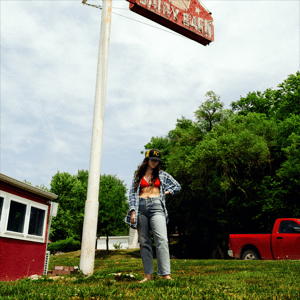
Waxahatchee- Tiger’s Blood (Anti)
Over the course of a decade and five studio efforts, singer-songwriter Katie Crutchfield has slowly but surely established her musical identity of Waxahatchee as one of the most pivotal poetic voices in the modern folk landscape. 2020’s Saint Cloud, with its intimately frank portraits of her life while fending off a burgeoning alcohol addiction, proved to break her through to the next level of critical acclaim on her upward trajectory. Arriving four years later, Tiger’s Blood seems to peacefully settle into the aftermath of that battle, as Crutchfield looks forward to her next life phase with the same kind of crystalline clarity that colors her fetching voice. It’s impossible to not lose yourself in her chirpy, folksy wail (“365”, anyone? Wowsa!), which registers a uniquely evocative sweet spot throughout each of the dozen equally cozy but potent performances. Crutchfield and producer Brad Cook flesh out the existing Waxahatchee palate with the addition of MJ Lenderman on guitar (and duet vocals on standout, “Right Back To It”). It proves to be a slam-dunk move, with Lenderman’s warm touch providing the same kind of subtle folk potency that matches both Crutchfield’s singing and lyricism. His tender rock influences, particularly on tracks like “Bored” and “Crowbar”, allow a once Lo-Fi folk sound to organically evolve into a fuller folk-rock sound that pares marvelously with the overall forward-looking spirit beating at the heart of the record. Consequently, all of these elements establish Tiger’s Blood as the next natural evolutionary step for an increasingly captivating and vital artistic force in the Americana scene. One can’t help but feel that we’re just starting to see and hear what Waxahatchee is capable of.
 The 706
Leave a comment