On the title track to Sheryl Crow’s recently released Evolution album, the recent Rock & Roll Hall of Fame inductee finds herself grappling with the frightening artistic implications of Artificial Intelligence technology. The use of AI has become an increasingly prevalent source of debate over the past few years in both the artistic world, and overall society as a whole. For curators and lovers of the music industry, its advancement seems to be the most threatening in a long line of blows that technology has fired at the overall authenticity of popular music during the past several decades.
Similar debates have raged over a vast range of topics throughout the modern era of recorded music. The once blasphemous idea of lip-syncing a live performance is rarely met with a batted eye in 2024, thanks to the production policies long ago incorporated for televised musical programs, not to mention the choreography-centric stage shows of pop superstars like Madonna, Janet Jackson, Britney Spears, and many more. And there are plenty of other modern singers and bands who also mime many of their premium-priced performances; they’re just less transparent or obvious about it…or so they may think. We’ve also witnessed and bemoaned the evolution of AutoTune from a charming quirk in Cher’s 1998 smash, “Believe” to both a horrible T-Pain novelty, and ultimately a normalized studio enhancement on far more records than we’d probably care to know. As the new millennium dawned and coincided with the rise of electronic dance music, we witnessed the ratio between legitimate instrumentation and computerized arrangements grow dramatically disparate on mainstream platforms.
To be fair, studio trickery and experimentation has been prominent since at least the 1960s. We need not look any further than what is arguably regarded as the greatest album of all time, Sgt. Pepper’s Lonely Hearts Club Band. This masterpiece all-out celebrated the liberation achieved when The Beatles stopped touring, by indulging in complex studio experimentation that was (at the time) impossible to recreate in a live environment. If you’re following our site’s ongoing Artist In Residence anthology on the Fab Four, you’ll know that I’m not suggesting the artistic merit of Pepper’s is anywhere comparable to a Britney Vegas Residency or an EDM “concert”. All I’m merely stating is that we’ve at least been reconciling and subverting the differing measurements we make for fulfillment from recorded works for decades now.
Many listeners gasped with disdain in 1991 when the late Nat King Cole’s standard, “Unforgettable” became a Grammy-winning smash in the form of a virtual duet with his daughter, Natalie Cole. And, let’s be sure to give our controversial due to country star Deborah Allen, who foreshadowed the Cole record over a decade earlier by employing the same technique, and subsequently sent a hat-trick of Jim Reeves “duets” into the country top-ten. In 2003, Anita Cochran upped the ante and killed what was left of her mainstream country career when she released a collab with the late Conway Twitty that actually spliced together different phrases from earlier recordings.
The moral conundrums raised by these recordings surrounded both the artificiality caused by the fact that artists never recorded the tracks together in the studio, and the fact that the deceased parties weren’t given the chance to consent to said releases. But with today’s virtual and remote capabilities of recording, it’s a rarity if collaborative contributions are created on the same coast, much less in the studio together. And for decades, our hunger for new material has had us devouring posthumous releases from our passed-on favorites. In 2008, RCA Records released Elvis Presley’s Christmas Duets, which found the King crooning his best-known Christmas classics side-by-side with an array of modern female country vocalists, several of whom weren’t even born at the time of Presley’s 1977 passing. Finally, last fall witnessed the release of The Beatles’ “final single”, “Now & Then”, which found surviving members Paul McCartney and Ringo Starr technologically marrying past demo work and vocal tracks from the late John Lennon and George Harrison to craft the performance. The nostalgic novelty created by “Now & Then” was met with near universal acceptance, including by yours truly in the November 2023 edition of The 706 Singles Digest.
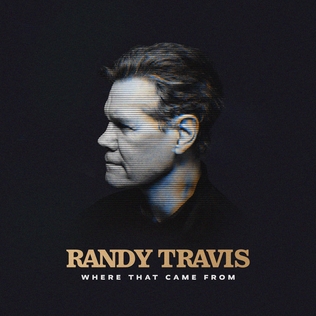
All of this leads us to last week’s release of the new Randy Travis single, “Where That Came From”. It marks the first release of new material from the country icon since he suffered a near-fatal stroke in 2013, effectively and tragically silencing one of the truly definitive voices of the past century. To this day, Travis can still not speak, however the rest of his mental capacities remain in-tact. And with himself and long-time producer Kyle Lehning at the creative helm, they utilized a tedious AI process to merge vocal splices from previous Travis recordings and a base performance of the song by singer James Dupre to create the final vocal track. The final product is indeed a marvel of a technical recording. It truly sounds like vintage, peak-Randy Travis, right down to the emotional character and nuances that have always set him apart from his fellow singers. I found it difficult not to be swept up in the beautiful nostalgia of the track. But, I also couldn’t help but feel overshadowed by the lingering conflict I felt given the source of its creation, and as Crow combatted in her aforementioned song, fear what the overall implications could on the practice of creating music and art.
Enjoying our content? Follow us on Facebook and subscribe using the links below!
The segment documenting the creation of the single on CBS Sunday Morning did admittedly help alleviate some of my doubts, and I highly recommend seeking it out yourself. From a technical standpoint, I was comforted in seeing how truly difficult it was to create an AI-sourced record of this caliber. The fact that Lehning is unsure as to whether they’ll be able to do it again is both disheartening for the Travis camp, but also comforting to know the challenge it was to deliver something on another level from the obviously computerized AI-tracks already littering the Internet. From an ethical standpoint, I was equally comforted by the amount of rightful recognition given to Dupre as the contributing vocalist (and I can only hope his compensation follows in that light.) This is not some Milli Vanilli-scam being dished out by Travis or Warner Brothers Records.
Lastly, and most powerfully, the emotional standpoint is what ultimately sells the entire project. Seeing the pride emanating from Travis, his family, and his team as they listened to the final record felt truly touching, and wholly authentic. As WB president Cris Lacy states in the piece, this process gave Randy Travis back his “voice” and a means to express himself artistically, even if for just a singular moment. Yes, that notion certainly rings like a label angle for the press in many ways, but it also doesn’t diminish its truth. Will I ever be able to enjoy and appreciate this record on the same level that I do classic Travis performances like “Diggin’ Up Bones” or “Deeper Than the Holler”? Certainly not. But that’s okay. I love and appreciate a wide spectrum of recorded music, and it doesn’t all have to be loved and appreciated in the same regard with the same criteria. I can jump for joy when Pitbull and Kesha’s “Timber” comes on my iPhone shuffle, and likewise recognize that I’m not getting the same kind of fulfillment as say, Jason Isbell’s “Cover Me Up”, which I adore for drastically different merits and reasons. Those experiences can coexist and need not cancel each other out.
Now, with all of that said, does this whole moment put us at risk for one hell of a slippery slope? Unquestionably, and we should not allow the sentimental joy of seeing Randy Travis make an unconventional comeback blind us from these facts. Does this whole release make me consider the positive uses of AI, as championed in the CBS piece? Sure, I do feel my mind opening to the artistic options presented by this advancement to a silenced performer like Travis or say, Linda Ronstadt, should they feel comfortable with it. However, do I want it as the go-to for aging artists that can still physically perform, but just not at the standards of their peak? Definitely not, and I realize that it may seem unfair to apply any sort of scale of acceptance to the entire scenario. If Mariah Carey can still sing to a certain degree, but time has silenced her legendary whistle tone, it probably seems like a double standard that I don’t want her to just use AI to create it on record from here on out (and yes, I realize she probably has already done so for years with the use of studio tools).
However, this is where the slippery slope of tarnished authenticity really rears its ugly head. Do I wish the voices of artists like Shania Twain and Jon Bon Jovi still sounded like they did prior to their respective, well-documented struggles with vocal loss and recovery? Hell, yes. But do I also think there’s some added pathos to their latter-day work to reflect the state of their voices after going through such an ordeal? Hell yes, again. I think there’s something lost if the next records from say, Emmylou Harris or Willie Nelson suddenly return to the vocal quality they produced in the 70s. Can one imagine how much the impact of Johnny Cash’s classic “Hurt” would have suffered if he did not sound like he was approaching the end of life? These supposed imperfections make for key ingredients in many of the most pivotal records of all time, and they should not be erased from the overall musical experience. Lastly, let’s not even entertain the dilemma of newly crafted “performances” appearing from deceased artists like Cash, Patsy, Elvis, Michael, Aretha, Whitney, Nat, Lennon and on and on. For me, the disturbance of those legacies is the ultimate threat in a post-AI world, and let’s hope that their heirs and record labels feel the same.
In the aforementioned Sheryl Crow song, she frankly opines, “Is it beyond intelligence? As if the soul need not exist….No matter how well you can outdo me, there is one thing you will never do, and it’s feel”. Feeling. Emotion. Soul. Ultimately, these are the key metrics we must continue to uphold in order to gauge the very thin line between artistry and artifice in the era of Artificial Intelligence. The new Randy Travis release certainly lands on the positive side of that coin, but I suspect it will be a rare, if not a singular, accomplishment in this new and complicated territory of musical creation.
Enjoying our content? Follow us on Facebook and subscribe by clicking the links below!
 The 706