
As the year 1965 launched, The Beatles were in firm control of the popular music universe on both sides of the Atlantic, having spent the last eleven months soaring across the threshold of superstardom in the wake of their arrival in the United States. By the close of 1964, the band had sent six different singles to the top of the Billboard Hot 100, and they were just getting started. This collection of releases only added gasoline to the fire of their colossal hit streak, while also slowly evolving their sound from the golden pop sound of their early days toward the more complex narratives and stylings of their latter catalog.

“Eight Days A Week” (b/w “I Don’t Want to Spoil the Party”), Capitol, 1965
From the album, Beatles For Sale
Songwriters: John Lennon and Paul McCartney
Producer: George Martin
#1 (US), #1 (UK), #1 (Canada)
There’s no denying the effortless contagion of “Eight Days A Week” and I’ll forever have fond memories of singing along deliriously to the song during my pre-teen love affair with the local oldies station. With that said, it has always had the reputation as one of the lesser hits of the Beatles’ early streak, and that’s not an unfounded claim. While their earlier iterations of bubblegum still had considerable meat on the bones of their candy-coated hooks, this one feels a bit emptier in its caloric intake, with a hook that gets just a twee long in the tooth. It endures nonetheless, thanks to the sheer charm and star-power of the band itself. It also offered a subtle piece of pop innovation with its “fade-in” intro, and its B-side is a dark-horse gem that Rosanne Cash aptly turned into a bona-fide country classic a quarter-century later.

“Ticket to Ride” (b/w “Yes It Is”), Capitol, 1965
From the album, Help!
Songwriters: John Lennon and Paul McCartney
Producer: George Martin
#1 (US), #1 (UK), #1 (Canada)
The lead single from their fifth studio set and a feature in their second film, “Ticket to Ride” shines in stark contrast to its predecessor for being one of their most muscular pop-rock gems to date, and served as a sly evolutionary step in their overall artistry. Topically, it was their first truly down-beat rocker, with John Lennon’s signature gloomy undertones being put to marvelous use as a narrator witnessing the departure of his loved one. Sonically, it learns heavily into the jangly folk-rock sounds of the mid-sixties that would underscore the entire supporting album, and both George Harrison’s guitar magic and Ringo Starr’s drum wizardry adapt perfectly. Their infectious pop mastery remains on its A-game as well, particularly with the nervy tempo change on the song’s coda and the soaring finale that follows it.
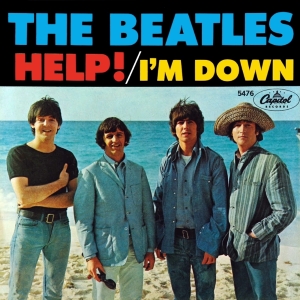
“Help!” (b/w “I’m Down”), Capitol, 1965
From the album, Help!
Songwriters: John Lennon and Paul McCartney
Producer: George Martin
#1 (US), #1 (UK), #1 (Canada)
The titular track to the Beatles’ definitive 1965 project pushed the moody subject matter of “Ticket to Ride” into increasingly pensive territory for the band. Primarily written by Lennon, he confirmed that the song was a literal “call for help” as he struggled to process all of the stressful pressures and chaos that came along with the group’s sudden fame. It proved to his most pivotal moment to date, compositionally and vocally, with his performance displaying a remarkable range of emotive power. It cascades brilliantly between brooding reflection and anxious vulnerability, beautifully underscored by tremendous musicianship and a hair-raising vocal finale. And in true Beatles fashion, it’s equally as contagious as it is cathartic.
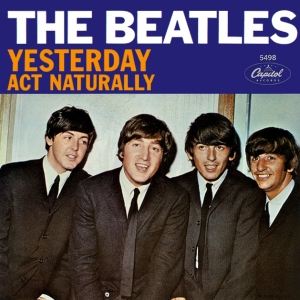
“Yesterday” (b/w “Act Naturally), Capitol, 1965
From the album, Help!
Songwriters: John Lennon and Paul McCartney
Producer: George Martin
#1 (US), N/A (UK)
By the time “Yesterday” was released as an American single in the fall of 1965 (despite the band’s opposition to that decision), the Beatles had delivered a short-order of undeniable classic hits. “Yesterday” however will forever have the distinction as their first masterpiece. And as one of the most covered songs in history, at an estimated 2,200 recorded interpretations, it’s an indisputable standard. An elegant and utterly devastating break-up song, which featured its composer Paul McCartney solo with just his acoustic guitar and a string quartet, it completed the group’s ongoing transition from mere hit-makers to serious musical composers and artists. It remains a toweringly emotional performance, retaining every ounce of its beautiful poignancy despite the passage of six decades and countless spins versions. It’s an undeniable landmark at the center of the impact left by both the band as a whole, and McCartney as a solo artist as well.

“We Can Work It Out”/”Day Tripper”, Capitol, 1965
Songwriters: John Lennon and Paul McCartney
Producer: George Martin
#1 (US), #1 (UK), #1 (Canada)
The group closed out 1965 incredibly strong with this excellent double-A-sided single, a pair of songs that continued to elevate their ability in crafting increasingly thoughtful and diverse rock. With its prominent harmonium arrangement and the resulting waltz leanings, “We Can Work It Out” once again presented the band in wholly unique stylistic setting that they adapted to with natural vibrancy, while topically contemplating life’s fleeting tendencies and the need for compromise across all of one’s relationships. Meanwhile, “Day Tripper” boasts easily the most thrilling guitar work of the front-half of the 60s and pairs it with an equally enticing lead duet from Lennon & McCartney, whose vocals feel drenched in equal layers of primal soul and the early onset of trippy psychedelia. It radiates with effortlessly cool danger. An unstoppable pairing of tracks, and gloriously indicative of what was to come heading into the quartet’s 1966…

Previous: Singles, 1964
Next: Singles, 1966
Enjoying our content? Follow us on Facebook and subscribe by clicking the links below!
 The 706