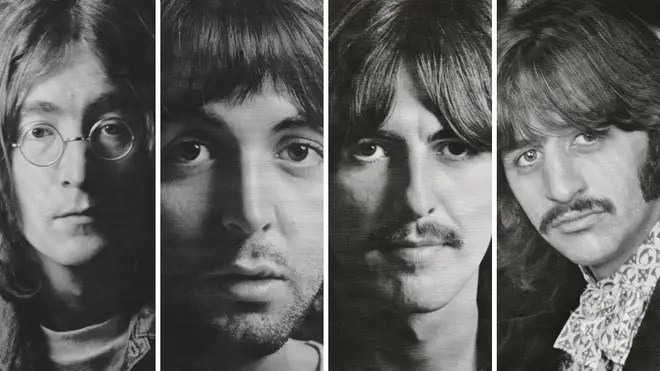
By 1968, The Beatles had led the way in completely transcending and reinventing the expectations and boundaries of rock music as an art form, with their progressive recordings throughout 1966 and 1967 expanding the palate of Western popular music to include psychedelic, avant garde, and Eastern-World sounds and influences. Yet as universally celebrated and awe-inspiring as those creative ambitions by the Fab Four and other rock acts at the time certainly were, there was burgeoning public hunger for music that was emblematic of the more organic and instrumental roots of early pop and rock. Now, this did not mean that acts like the Beatles had to regress backwards. They had officially graduated to a more mature level of musical expression, creativity, and songwriting, and to hear those elevated qualities accompanied by a more traditional, instrumentally oriented sound would only further push the story of rock music forward. They led the way once again, this time into the golden period of classic rock that would define the late sixties and early seventies.

“Lady Madonna” (b/w “The Inner Light”)
Songwriters: John Lennon and Paul McCartney
Producer: George Martin
#4 (US), #1 (UK), #1 (Canada)
Trading in the psychedelic sounds that defined their 1967 classics for a bawdy, boogie-woogie, blues-rock sound anchored by shuffling pianos and popping horn arrangements, “Lady Madonna” felt like an instrumental reawakening for the group. By returning the group to a more organically musical arrangement, the song only further showcased just how much the group had grown as a whole. The guitar solos certainly give it a rock-rejuvenation spirit, however the brass breaks really steal the show from an instrumental standpoint, adding yet another layer of sonic depth to the band’s boldly growing repertoire. Thematically, it’s a rousing celebration of the grit, perseverance, and seemingly unending sacrifice displayed by a single mother to her many children, shedding light on a sector of the society that was far-too-rarely celebrated on the radio waves. Paul McCartney’s chipper and bouncy performance brings it all together in a typically marvelous fashion.
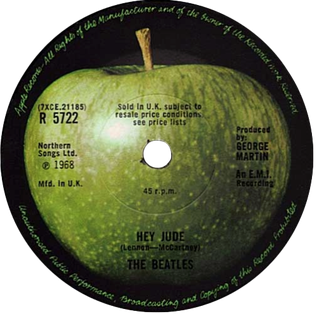
“Hey Jude” (b/w “Revolution”)
Songwriters: John Lennon and Paul McCartney
Producer: George Martin
#1 (US), #1 (UK), #1 (Canada)
McCartney’s unparalleled magic as a performer is on even more passionate and dramatic display on “Hey Jude”, easily one of the most heralded pop and rock songs in history, and unquestionably a centerpiece in both the band’s catalog, as well as that of McCartney’s itself. The impetus of the classic would be John Lennon’s separation from his wife, Cynthia, to pursue his infamous union with Yoko Ono, and was written by Macca as an attempt to console the Lennon’s devastated six-year-old son, Julian Lennon. His performance spills over with magnetic empathy, comfort, and sentimentality; the kind that McCartney has proven countless times that he’s an ultimate master of. The song has grown to become a source of peace and inspiration for anyone faced with a challenging change in their life, a soft but profound encouragement to persevere through the storm in front of them. In turn, the song was also interpreted by many, including John himself, as a blessing from Paul regarding his new romance (“You have found her, now go and get her!”). The fact that it ultimately served as a comfort to both Lennon’s shattered family, but also as support for his new and controversial union in truth speaks to the universality of the song, and its ability to become a worldwide anthem for comfort and grief, most memorably as a McCartney concert-staple in the wake of John’s 1980 assassination.The emotional musical escalation of the song’s arrangement is one of the most staggering in history, with McCartney’s initially gospel-tinged melody and emotive vocal slowly swelling before it’s joined by all-out orchestral backdrop, and a rocking one at that. By the time the song’s four-minute coda bursts into a full-blown sing-along, it has ultimately found its place as the beacon of hope, unity, and joy that it remains nearly six decades later. While many critics would bemoan the coda as excessively long and unnecessary, it would ultimately snare an impressive accolade with its own marathon-like quality: the record for longest duration at the top of the Billboard Hot 100, a stat it would retain for nearly a decade. With a wide range of cover versions by everyone from Elvis Presley, Wilson Pickett, and Tom Jones to Diana Ross, Ella Fitzgerald, and freaking Count Basie, “Hey Jude” is a golden standard in the worldwide songbook, and a true treasure in the Beatles catalog.

Previous: Singles, 1967

Next: Singles, 1969
Enjoying our content? Follow us on Facebook and subscribe using the links below!
 The 706