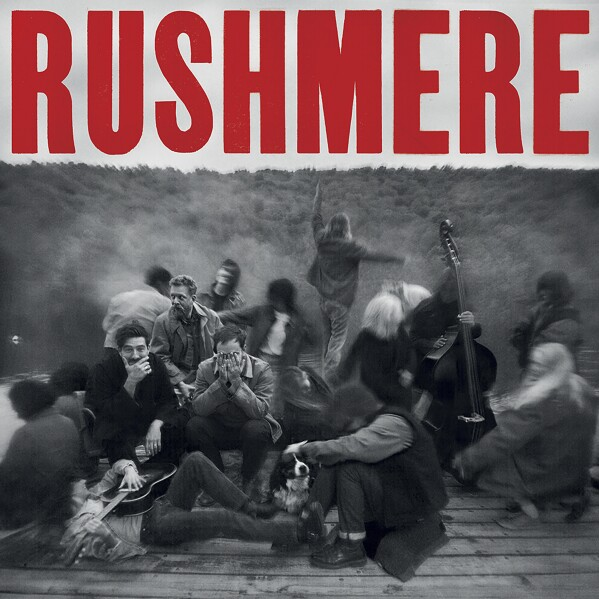
Mumford & Sons- Rushmere
Label: Glassnote
Producers: Mumford & Sons, Dave Cobb
As their first studio release in nearly seven years, Rushmere naturally represents the culmination of much change for Mumford & Sons. During the intervening years since 2018’s Delta, the band downsized from a quartet to a trio with the controversial exit of guitarist/banjoist Winston Marshall, and the remaining members spent time apart working on their own individual ventures, most prominently bandleader Marcus Mumford’s first solo record with 2021’s Self-Titled. Commercially speaking, the passage of time has also further separated them from the final vestiges of the 2010s folk-rock stomp movement that temporarily cast the band as a leading presence in the overall pop mainstream. Stylistically speaking, this natural occurrence likewise releases them from the polarizing sonic debate that defined their past two albums, with an industry audience constantly pivoting between whether they wanted M&S to stay loyal to their more organic folk roots, or continue exploring the alt-rock sounds that triumphed on 2015’s Wilder Mind, but fizzled out a bit on Delta.
All of this makes Rushmere feel like a perfectly-timed album to reset their creative trajectory. Now undeniably past their commercial peak, the band has retained a rabidly loyal fanbase that’s supported them from the beginning, long before the general (and much more fickle) public caught wind of their alluring sound for a flavor-of-the-month moment. Those loyalists will immediately feel rewarded by the core sound that this album fully devotes itself to. It’s their first collaboration with acclaimed producer Dave Cobb, who as the producer for acts like Jason Isbell, Chris Stapleton, Sturgill Simpson, and Brandi Carlile, has been a critical architect for the Americana movement the Mumford troops were always on the fringes of. Together, Cobb and the band travel back to the more stripped, banjo & guitar-centric (ironic given Marshall’s departure) folk-rock sound that defined their first two records, breakout debut Sigh No More in particular. Mumford’s gripping, graveled voice is as passionately striking as ever, and the band’s ability to craft the kind of emotional compositions and wrenching instrumentation that best suits Marcus’ vocal strengths is ever-sturdy and seamless.
Tonally, this is also the band’s most restrained outing to date. Their music has always been intimately emotional and introspective, but there’s considerably less of the intense volume that used to define their signature whispered verse/anthemic chorus template that critics loved to characterize as a tiring caricature against them. Rousing singles like the title track, “Malibu” and “Caroline” or tracks like “Truth” still offer plenty of that classic Mumford gut-punch, but there’s nothing to be found here with the ferocity of past performances like “Thistle & Weeds”, “Broken Crown” or “Little Lion Man”. This shouldn’t be mistaken as evidence of a band losing their fire, but rather one that has matured and tempered with accumulated time and age. They’ve learned that there are subtler and more effective ways to make their grandest and most impactful points, as evidenced by unassuming gems like “Monochrome”, “Where It Belongs”, and “Anchor”. This kind of reflective and liberating growth is most beautifully demonstrated on album closer, “Carry On”, which feels like a glowing compass for the band’s future, one filled with acceptance, gratitude, and clarity. I’m certainly not saying that I’m welcoming the complete abandonment of that past fire and intensity, but it’s refreshing to see that Mumford & Sons aren’t staying stuck in the same old gears of the past, an accusatory trope that was always excessively leveled against them from their breakthrough forward.
There are many things that the Rushmere album is not. First, it is not going to be, nor is it positioned or intended to be, the second coming of 2010s folk-rock revival in the pop mainstream. Secondly, it is not an effort to cater to wider commercial rock and alternative audiences like its two predecessors. It’s also not some dramatically significant comeback or reinvention campaign for the band. Rather, it’s a cozy yet ever-potent creative and emotional reset; a collection of ten straight-forwardly Mumford & Sons moments curated specifically or those of us that identify as one of those straight-forward Mumford & Sons loyalists mentioned above. Even for those of us, Rushmere will likely not be the most significantly essential or revelatory album of our 2025 musical journey, but it will certainly serve as a reliable, low-key favorite, and a welcome return from one of the true artistic forces of the previous decade.
Track List:
- “Malibu” (Marcus Mumford, Ben Lovett, Ted Dwane)
- “Caroline” (Mumford, Lovett, Dwane)
- “Rushmere” (Mumford, Lovett, Dwane, Natalie Hemby, Greg Kurstin)
- “Monochrome” (Mumford, Lovett, Dwane)
- “Truth” (Mumford, Lovett, Dwane)
- “Where It Belongs” (Mumford, Lovett, Dwane)
- “Anchor” (Mumford, Lovett, Dwane, Justin Hayward-Young)
- “Surrender” (Mumford, Lovett, Dwane, Kurstin, Caitlyn Smith)
- “Blood on the Page” featuring Madison Cunningham (Mumford, Lovett, Dwane)
- “Carry On” (Mumford, Lovett, Dwane)
 The 706