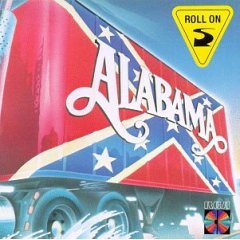
25) Alabama- Roll On
Roll On arrived in the midst of Alabama’s unprecedented dominance of the country music universe, and it followed the formula perfectly balanced to keep them at top. Classic smashes like the title track and “If You’re Gonna Play In Texas (You Gotta Have A Fiddle In the Band)” kept country purists satisfied by reinforcing the group’s blue-collar, down-home sweet-spot. Meanwhile, “When We Make Love” served up the quintessential 80s love song that kept the earlier crossover magic of the previous year’s “The Closer You Get” burning strong on both the country and pop charts. Album cuts like “The End of the Lyin'”, “I’m Not That Way Anymore”, and “Country Side of Life” make up the sturdy bones of the record, recalling the previous decade’s blockbuster records of The Eagles, further affirming how that group’s work foreshadowed the superstar success of a full-piece country band that could straddle both sides of the Top 40 coin.
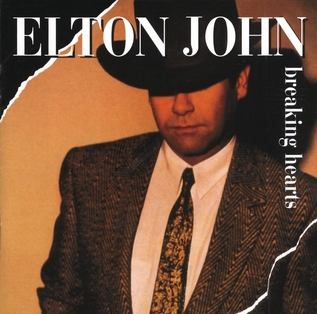
24) Elton John- Breaking Hearts
Despite boasting a smash lead single in the enduring classic, “Sad Songs (Say So Much)”, Breaking Hearts has become a bit of a lost classic in the overall Elton John canon. This can be attributed both to the fact that it admittedly doesn’t reach the heights of John’s greatest works, and also doesn’t find Elton trying to abide by the quickly evolving sound of pop and rock in the MTV-age, as so many of his peers were doing. Nevertheless, it’s a solid album that holds up all these decades later, with the legend still waxing the melodic, resonant, and piano-driven brand of rock that will forever be his wheelhouse. It also serves as the final record where he was supported by the most famous line up of his Elton John Band, and it proves be a worthy final curtain, with the entire ensemble sounding crisp, confident, and glowingly on their A-games throughout.
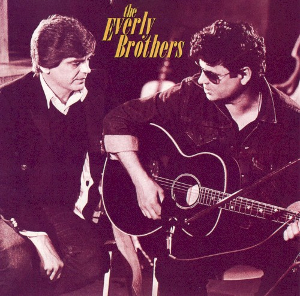
23) The Everly Brothers- EB 84
Hell gloriously froze over when The Everly Brothers finally reunited in the studio after a decade-long stalemate, and their timelessly magical harmonies sounded just as fresh and life-changing here as they did three decades prior. In fact, the passage of time and age had only added new shades of rollicking yet ethereal wonder, and they sound absolutely rejuvenated creatively by the fresh material and sonic direction explored throughout EB 84. The top-shelf material from the pens of Paul McCartney, Bob Dylan, Jeff Lynne, Paul Kennerley, Frankie Miller, and Don himself was ever-worthy of the momentous rock moment that their reunion certainly was, and to hear their voices framed in producer Dave Edmunds’ modern soundscapes of pub rock and New Wave was nothing short of thrilling. The Everlys could have easily settled for a retro nostalgia-piece of a comeback steeped in their classic sound, and fans would have certainly been pleased. But their decision to go this route is so much more entertaining. This record is way overdue for reappraisal as the true-blue 80s landmark that it is.
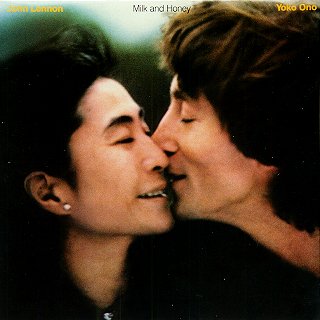
22) John Lennon & Yoko Ono- Milk and Honey
Released more than three years after the assassination of John Lennon, Milk & Honey would be the first official posthumous release of remaining material that Lennon was working on in the time leading up to his untimely demise. That fact alone makes it an undeniably important release, and though there is a hodge-podge element to the proceedings, with its non-duets album format merely supplementing Lennon’s remaining solo cuts with those of Ono’s, the record does have some sincere merit behind it. It’s clear that Ono and the label assembled the record as a thoughtful labor of love, rather than that of a haphazard compilation. Ultimately, Ono’s own contributions will always be an acquired taste; everyone was really here for the unreleased Lennon tracks. They do provide an entertaining and bittersweet peek into what the legend would have sounded like navigating the new and uncharted territories of pop music in the 1980s. The jangly hit single, “Nobody Told Me” suggests he would have been an unsurprising leader in the roots-rock revival, while “Grow Old With Me”, even in its rough demo state, became a posthumous standard in his legendary lexicon.
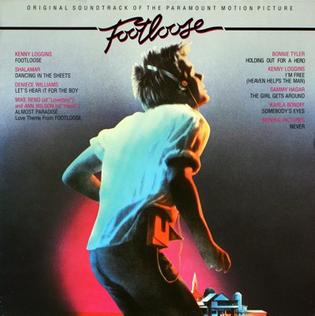
21) Various Artists- Footloose Original Motion Picture Soundtrack
More than any other decade before or since, the 1980s was utterly prolific in pairing cinema classics with equally box-office worthy soundtracks that together produced unmitigated pop-culture gold. With its music-centered storyline, Footloose was arguably the most iconic in this regard. Of course, the immortally infectious title track will always be the anchor of the set, officially establishing Kenny Loggins as the unrivaled King of the Soundtrack, and joyously cementing the image of Kevin Bacon’s closing scene dance moves in our social consciousness for eternity. Its track-list is a deep one however, boasting additional radio smashes like Deniece Williams’ “Let’s Hear It For The Boy”, Bonnie Tyler’s “Holding Out For A Hero”, and Mike Reno and Ann Wilson’s “Almost Paradise”. Rounding out the set with more bopping cuts from Loggins, Shalamar, Sammy Hagar, and others, Footloose is a feel-good, 80s pop juggernaut, and it only grows more joyously rewarding with time.
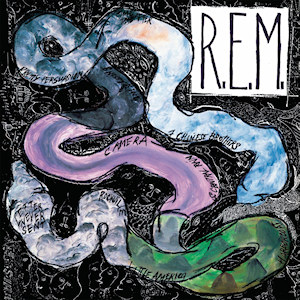
20) R.E.M.- Reckoning
Injecting just a few more pinches of polish and confidence into the scrappy, refreshingly jangly template of their debut the previous year, Reckoning slowing but surely grew R.E.M.’s underground cult status, and remains a cult-classic itself all these decades later. Its uniformly strong make-up as an overall body of work also stacks up against any of the big-sellers in the group’s catalog. Michael Stipe’s inimitably haunting vocals, the gorgeously ominous nature of their songs, and Peter Buck’s oh-so-delectable Rickenbacker guitar licks are in all their glory throughout. It would still be three years and three albums before they truly broke through, but an iconic and foreboding performance of “So. Central Rain (I’m Sorry)” on The Late Show with David Letterman would give them their first brush with the mainstream spectrum. This record was every bit the Reckoning it promised to be, helping to forecast the next sonic direction of rock music as a whole.

19) George Strait- Does Fort Worth Ever Cross Your Mind
With three big-selling albums already under his belt, George Strait had already established himself as a young, neo-traditional voice for country gatekeepers to cling to in the gloss-ridden Urban Cowboy climate of the early 80s. However, it was Does Fort Worth Ever Cross Your Mind that emphatically announced Strait as the premier face of the New Traditionalist movement of the time, and the perennial King of the entire genre. Offering precisely zero nods to the pop-influenced sounds of modern country radio, Strait and new (and eventually long-time) producer Jimmy Bowen have positively perfected Strait’s sound here. It’s a deep collection of unapologetically twangy songs dripping in the classic sounds of Western Swing and old-school honky-tonk. They color them with just a subtle touch of polished flare, without ever undermining the timelessly vintage spirit of the songs. And Strait has absolutely entered his vocal prime at this stage; his singing is flawless in all its Western-tinged crooning. This record could have been a flagship country release in any era, but it arrived at a time when the art-form needed it most.
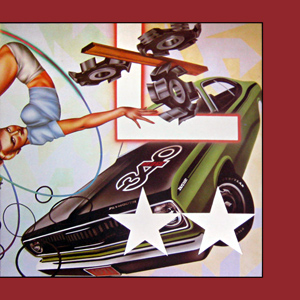
18) The Cars- Heartbeat City
Although it would prove to be their final smash, as well as the penultimate album before their initial disbanding, Heartbeat City would also prove to the blue-print for existing rock stars to successfully evolve into the MTV-era of the mid-80s. Uniting with rock behemoth Mutt Lange for his first and only stint as their producer, the record boldly pushed The Cars’ established New Wave rock sounds into the newest rock and pop environments, while staying the true to the core elements that made them instant Classic Rock stalwarts. With a stacked track-list, the LP boasted six hit singles, earned quadruple platinum status, and in a delirious twist, earned them the first-ever MTV Video Music Award for Video of the Year for “You Might Think”. In the case of The Cars, video most certainly did not kill the radio star. And though it did employ many of the production gimmicks of the era, the record still sounds as crisp and fresh as it did in ’84. A sensational pop-rock triumph in every regard.
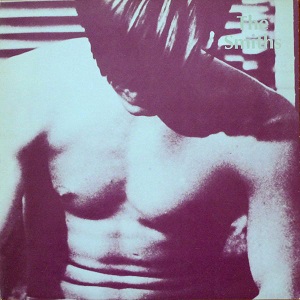
17) The Smiths- The Smiths
A landmark recording in the development of alternative rock, not to mention the Second British Invasion, and certainly the landscape of 1980s popular music, The Smiths completely subverted not only the rock and pop tropes of the time, but from any other era for that matter. Anchored by Morrissey’s one-day legendarily idiosyncratic vocal deliveries, he and collaborator Johnny Marr unleashed a fearlessly dark harvest of songs centered by rumination on sexual politics. At its core, it’s unquestionably one of the era’s most morose releases. However, it was also intriguingly paired with a production that wasn’t afraid to lean into an ironic rock jangle, a sound that simultaneously offers the listener comfort and only further illustrates the density of the subject matter. These sonic choices lend the record a surprisingly soulful warmth, and in many spots, even a contagion that could not have been anticipated at the outset. It all makes The Smiths, and the band behind it, one of the 1980s’ most rewardingly grand contradictions.
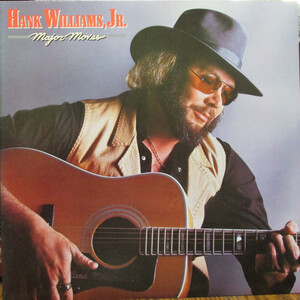
16) Hank Williams Jr.- Major Moves
Though it’s but one of many classic albums that he created during this era, Major Moves would become Hank Williams Jr.’s most commercially dominant for good reason: it’s the most concise distillation of all the high-octane, boogie-woogie, Southern Rock goodness that made the second generation star one of his own generation’s most potent musical attractions. Of course, it shoots out like a cannonball from the get-go with the classic party anthem, “All My Rowdy Friends Are Coming Over Tonight”, which immediately sets the tone for the energetic listening experience ahead. But while Jr. will always be most identified with the signature Southern Rock fire represented by that iconic anthem, Major Moves is also a showcase of the diverse sonic palate that he’s too infrequently credited for. He dishes out classic country heartache with the title track, covers both Eric Clapton and John Anderson with equal-parts grease, brass and soul, mocks modern technology with the Dixieland jazz stylings of “Video Blues”, grasses it up with “Country Relaxin'”, and moans pure, classic blues with the likes of Ray Charles and John Lee Hooker on “The Blues Medley”. Easily one of the genre’s most entertaining sets of all time.

15) Queen- The Works
The Works arrived at the conclusion of what had been a rather turbulent period for Queen, ending a then-record two year gap between releases, as the band navigated internal differences and some fan backlash after they reneged on a previous vow to never use synthesizers, on 1982’s Hot Space. But, let’s be real: this band was as natural a fit for the sounds and imagery of the MTV era, as they were for the peak-years of Classic Rock the decade before. And The Works does live up to its title by balancing the group’s evolved stylistic curiosities with the classic trademarks of their past. Brian May’s rocking guitar solos and Roger Taylor’s iconic drum contributions return to a more prominent spotlight, while residing naturally against the more New Wave and electropop inclinations of the day. And Freddie Mercury remains at the top of his game as both an entertainer and a pure vocalist, with off-the-charts charisma on smashes like “Radio Ga Ga” and “I Want to Break Free”, as well as album cuts like the rockabilly reprise of “Man On the Prowl”. And on more soul-stirring fare like “It’s A Hard Life” or “Is This the World We Created”, he still delivers a show-stopping moment like no other performer of his generation.

14) Reba McEntire- My Kind of Country
The glorious artistic awakening from one of the greatest performers in musical history. After nearly a decade and seven studio albums toiling in the Urban Cowboy doldrums to varied success, Reba McEntire joined forces with producer Harold Shedd to craft the traditional country record that her singular voice was always destined to sing, and to flawless results. In the process, it not only helped kick country’s New Traditionalist movement into high-gear, but it also set McEntire on a path to rarified levels of superstardom, while etching her name alongside elite heroes like Loretta, Tammy, and Dolly. To hear her booming twang wrapped in the sweet sounds of twin fiddles for the first time on opener “How Blue” is a musical revelation of spiritual proportions, and one that continues without interruption through the rest of the record, whether it be on other instant-standards like “Somebody Should Leave”, or a treasure trove of twangy album cuts. She’d obviously expand in directions far beyond the framework of this record, but it has remained a constant artistic beacon in her catalog four decades later. The difference-maker between “what might’ve been” and one of the most spectacular careers of all time.

13) Sade- Diamond Life
It’s a sonic wonder to behold yet four decades later, but there’s no understating its stylistic impact in the popular music landscape of 1984, as this debuting British band brought the slick sounds of R&B, soul and smooth jazz off of its mainstream life support. It’s not that lead vocalist Sade Adu and her bandmates completely disregarded the pop templates of her fellow UK invaders at the time. But their primary devotion always remained the nu-soul stylings that ultimately gave Diamond Life its impressive heartbeat. Tracks like “Smooth Operator”, “Your Love Is King”, “When Am I Going to Make A Living”, and “Hang Onto Your Love” offer a joyous feast of influences both contemporary and classic, mainstream and underground. And Adu’s golden, enchanting pipes offer an awe-inspiring vessel for it all; few voices have even been this smoothly hypnotic. In the end, Diamond Life was an album that would feel both timeless and completely out-of-time in any era, and the fact that it became a bona-fide smash in the year it did is all the more impressive.

12) The Replacements- Let It Be
One of the most rewarding lane-changes of its generation, third album Let It Be found The Replacements impressively evolve beyond the gritty punk-rock roots of their first two albums, toward a fully-realized roots rock & roll identity that both honored their past, but was squarely focused on a future defined by a more mature musical vision. The musicianship is now played with crisp precision, the songs now rooted in thoughtful themes and discernible melodies, and Paul Westerberg emerges as a fully-formed bandleader, wholly confident and convicted in the future he’s leading his band towards. With all of that said, Let It Be is still nowhere close to being the polished, manufactured product that their punk origins despised. It’s still stacked with angst, attitude, and edginess, but it’s all filtered now through a far more intentional and effective musical vision. And it’s a vision that would make The Replacements one of the rock world’s most revered and influential critical darlings of the next decade.

11) The Judds- Why Not Me
Released nine months after their stunning EP served as an insatiable appetizer, The Judds’ debut long-player proved to be the satisfying entree that country fans were dreaming of, and more. With a rich and organically rootsy tapestry that felt like an endangered species in Nashville circa 1984, the album spanned a smorgasbord of traditional country, with delightful smatterings of bluegrass, rockabilly, and bluesy soul. It was the perfect showcase for the sublime mother-daughter harmonies of Naomi Judd and her twenty-three-year-old powerhouse, Wynonna, who even then sounded like a second coming of Patsy Cline. Their voices harkened back to the foundational family harmonies of country’s past, but their natural chemistry was also already tinged with hints of a saucy generational tension that made their records all the more magnetic. They would’ve sounded fantastic singing just about anything, but it certainly helped that the songs gathered here were all so excellent, from now-classics like “Girls Night Out”, “Mama, He’s Crazy” and “Love Is Alive” to hidden gems like “Mr. Pain”. But no moment towers more than the staggering title track that also opens the set. No wonder America was hooked from the get-go.
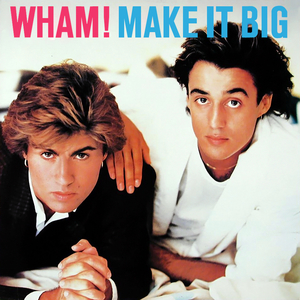
10) Wham!- Make It Big
The sensational sophomore effort from Wham! was and is everything that every pop music juggernaut should be. It’s unapologetically colorful and splashy in its presentation. Oh, and it’s also frivolous, romantic, dramatic, campy, dramatic, and endlessly fun. Across these eight perfectly crafted performances, George Michael and Andrew Ridgeley come into their own at the perfect time, and tap into all of the charming and infectious pop trademarks that defined mid-80s pop on both sides of the Atlantic. It turned both of them into mega-stars seemingly overnight, but just as the aforementioned Judds record served as a foregone conclusion to Wynonna’s own eventual superstardom, it was clear throughout Make It Big that Michael’s powerful pipes and unmatched charisma had him on the cusp of iconic solo status. This is pretty much brought to fruition on his closing solo number, “Careless Whisper”, one of the most show-stopping finales in the pop ether. But on our way there, Wham! collectively strikes lightning in a bottle, and delivers an album that represents one of popular music’s most infectious thirty minutes.
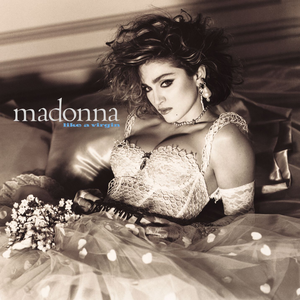
9) Madonna- Like A Virgin
While her 1983 debut disc was an unmitigated breakthrough for Madonna, her 1984 sophomore set is the groundbreaking moment that introduced her as America’s newest queen of pop, and one of music’s most vital artists for decades to come. With its titillating titular track, she also delivered a new sexual awakening for the music video age, and established herself as an artist more than willing to court controversy, an undeniable essential ingredient for pop-culture history. Sure, many of the overtures she would make in the years ahead ultimately made much of Like A Virgin seem positively quaint. But, this was one of the moments that truly illustrated how culture-shifting the MTV era would become. Prudish critics and parents may have balked, but Madonna only thrived on that opposition, with diamond record sales and a bevy of smash singles proving that she was no flash-in-the-pan. This record is still an eye and ear-popping thrill today. Simply put: 1984 wouldn’t be pop’s greatest year without the music of Madonna.
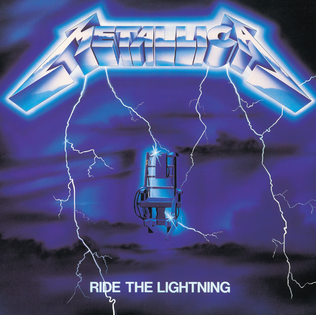
8) Metallica- Ride the Lightning
Ride the Lightning is thrash-metal’s bible; the album that unequivocally transcended the heavy-metal sub-genre into an artistically vital entity. It consciously took the sheer volume and rapid-fire dexterity of Metallica’s debut album and expanded it via more precise production and arrangements, as well as deeper subject matter within the lyrical content of the songs themselves. Listeners who ventured beyond the sonic spectacle on the surface of the music itself would be surprised and rewarded with a collection of songs that dripped with a combative social conscience, with material that explored everything from capital punishment (the title track) to suicide (“Fade to Black”) to the consequences of war (“For Whom the Bell Tolls”). And those are just the most famous tracks, which merely scratch the surface of the lyrical journeys and social reckoning lurking underneath all of the commanding roar of the music. Lightning was not just a record that pushed an individual band forward in their artistic evolution, but one that did the same for an entire musical sphere. It proved that heavy metal was not just a “bunch of noise”, but could be a newly pivotal form of musical and artistic expression.
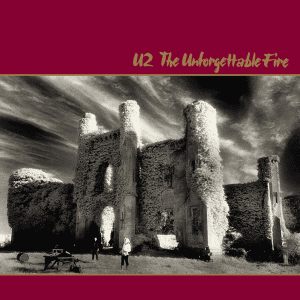
7) U2- The Unforgettable Fire
A pivotal artistic turning point that would forever alter the future of rock, The Unforgettable Fire is really the moment where we meet the version of U2 that would be a defining pillar of popular music for decades to come. In the aftermath of success they enjoyed with 1983’s War, the band was hungry to explore a creative path that extended beyond the straight-forward hard rock of their previous albums. In what now sounds like a standard Bono-cliche, the group retreated to a 200-year-old castle in Dublin to seek inspiration, and eventually gathered with producers Daniel Lanois and Brian Eno to craft a new shape-shifting album for the band. And the rest is rock and roll history. The Unforgettable Fire found U2 segue toward the more ambient, alternative-rock sound that became their hallmark and crafted socially-conscious rock standards like “Pride (In the Name of Love”), “MLK”, “Bad”, and the title track, among others. Certainly unforgettable, and also groundbreaking, Fire essentially birthed an entire musical institution that remains influential to this day.

6) Run-DMC- Run DMC
No, Run DMC is not the birthplace of Hip-Hop. The genre had existed for well over a decade by the time the duo’s debut release arrived in the spring of 1984. But in many significant ways, this album is where the Hip-Hop and rap genres as we would know them going forward would draw brand new roots from. The record was not afraid to rightfully present urban music on the same stage as mainstream rock, with its groundbreaking single, “Rock Box” emphatically proving how vital the two genres could be when integrated together. But most importantly, Run DMC wears all of its hardcore rap and Hip-Hop influences unabashedly on its sleeve throughout, with the sort of unmitigated pride, confidence, and artistic conviction that few of their peers were afforded heretofore. They knew that their sound belonged on the same main stage as the rock, pop, and R&B tastemakers, but also knew they didn’t have to rely solely on their influences to make the art they wanted to. The rap and Hip-Hop explosions of the 1980s, and later their stylistic domination of the 90s and 2000s, simply doesn’t happen without this record. A pioneering moment in every way, and a fun & thrilling listen yet today.

5) Frankie Goes to Hollywood- Welcome to the Pleasuredome
What a moment in time this artfully bizarre and brilliant record this is. And given the short shelf-life that proved to await Frankie Goes to Hollywood, it’s also a moment that is forever trapped in time. But still, what a gloriously fleeting moment to revisit. Welcome to the Pleasuredome will of course be forever remembered as the source album for the international smash, “Relax”, and all the hot & bothered controversy that it courted. And while that is a pretty appropriate representation of the album and FGTH’s run overall, it should serve as a gateway drug to the bold experience that this entire album is. In many ways, its concept resembles that of the great art-rock albums from the Classic Rock era, in that it completely throws all commercial conventions out the window. In the process, it presents the New Wave and electropop movements of the 80s as their own art-forms, rather than mere vehicles for radio candy. It’s nowhere near as flawless as something like Sgt. Peppers, but its ambition should be applauded, and there are sonically artistically surprises and concepts waiting around every corner. One can only imagine the results had the Frankie ensemble been destined for the long-haul.
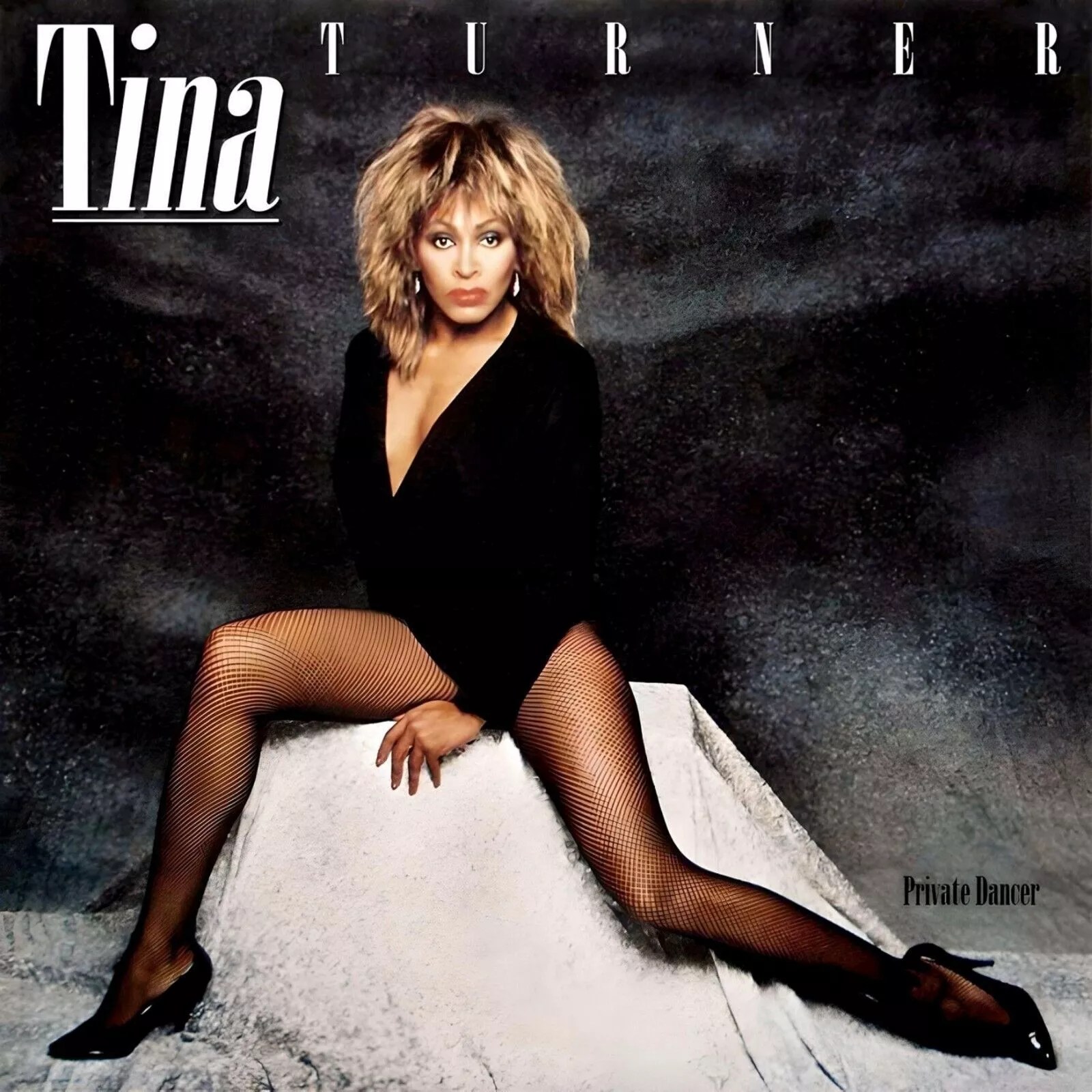
4) Tina Turner- Private Dancer
The music industry has always loved a good comeback story. So much so, that you can’t help but wonder if it intentionally cuts an artist off at the knees, just for the thrill of celebrating them on the glorious rebound. Nevertheless, there are few comeback tales more rewarding and refreshing than that of Tina Turner and her ascendance to the pop and rock summits via Private Dancer. Turner had struggled to score solo success in the aftermath of her messy separation from husband and former musical partner, Ike Turner, but Dancer changed all of that, with its millions of record sales and long overdue smash hits for the gutsy Tina. The entire record feels like a triumphant survivor’s anthem, defined by Turner’s signature gutsy vocals, dynamo presence, and a durable 80s backdrop of rock, funk, and pop that satisfies all of her sonic sweet spots. When she declares “I might’ve been queen” on the thunderous opener, the listener can’t help but audibly declare, “Girl, you’ve always been, and will always will be!”
3) Don Henley- Building the Perfect Beast
With just five solo albums released between 1982 and 2015, Don Henley is one of rock music’s less prolific solo stars. Yet the majority of those records feel like a definitive soundtrack to the era of Americana represented in each of their respective release periods. That monicker certainly rings true for Building the Perfect Beast, an epic magnum opus for Henley that is inextricable from mid-80s lore. From the moment you hear that iconic opening riff of “The Boys of Summer”, you’re instantly entranced and buckled in for a familiar forty-five minute journey. A journey through both timeless sagas of youth and romance, as well as thoughtful grapples with the most pressing cultural issues of the day, many of those timeless in themselves. Henley delivers it all with his incomparable and familiar vocal narrations, effortlessly melodic hooks, and a warm, thoughtful production blending the rock and pop sounds of past, present, and future. There were few beasts built more perfectly across the entire 80s spectrum than this landmark release.
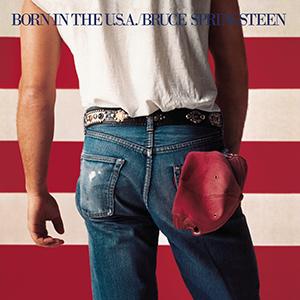
2) Bruce Springsteen- Born in the USA
By 1984, Bruce Springsteen had spent more than a decade as a critical rock & roll darling waiting for his commercial success to catch up to the scope of the legendary recordings he had issued throughout the 1970s. When he followed up his top-ten radio breakthrough, “Hungry Heart”, and its source album, The River, with the sparse demo collection, Nebraska, many were left pondering and ultimately accepting the fact that he may forever remain an underground cult-hero, rather than a blockbuster superstar. Enter Born in the USA, a worldwide record-setter with 30 million in sales, seven top-ten singles, and a perennial cultural touchstone for the 1980s, and well beyond. By the end of its run, Springsteen (and his legendary E-Street Band) had deservedly transformed into a stadium headliner, an MTV and mainstream radio-staple, and at long-last, one of the most revered singer-songwriters the world over. He accomplished all of this by staying mostly loyal to his previous rock sound, with subtle dashes of contemporary pop, but never enough to overshadow his complex, common-man narratives that were ripe for a national audience in the mid-80s. This lit a fire under the burgeoning Heartland Rock movement of the time, and placed the Boss and his contemporaries at the very forefront of mainstream music and culture. Most impressively, the monstrous success of Born in the USA didn’t spoil Springsteen’s artistic ambition. He continued steadfast down his path toward poetic, and rarely commercially-inclined, rock greatness, with this era being his only one squarely in the pop zeitgeist. Oh, but what a thunderously great period this was.

1) Prince and the Revolution- Purple Rain
When we first rolled out our Best of 1984 series back in the fall, I opined, as many have before me, that the glorious nature of this era of music is ultimately steeped in the joyously indulgent excesses of the time, musically and otherwise. And there’s no other artist or album that so perfectly represents the excesses of pop music, of rock & roll, and of the 1980s as a whole, than Prince and Purple Rain. The entire record is built around a feature file starring the singer himself, and both projects celebrated all of the star’s quirky mystery, melodramatic overtones, and grandiose artistic visions better than anything else in his legendary canon. Four decades later, it remains one of popular music’s most thrilling experiences, with Prince and his band The Revolution taking the listener through an appropriately cinematic and cascading wave of sounds, themes and emotions. Prince shreds like a hard-rock guitar God on the equally funky opener, “Let’s Go Crazy”, out controversies Madonna on the ridiculously cheerful raunch of “Darling Nikki”, chills you to the bone with “When Doves Cry”, conquers the dance-floor with “I Would Die 4 U”, and on the titular curtain-call, delivers perhaps the most cinematically show-stopping finale in the history of the entire LP format. Through it all, Prince thrives with each and every magical element of his entire repertoire in peak form, and in sync with each other like never before, or since. Prince’s career is chock-full of legendary moments, but none at the same level as Purple Rain, and the timeless aura that surrounds it to this day. It’s the crowning achievement, not only for one of the world’s all-time greatest entertainers, but also pop music’s greatest year, the immortally iconic 1984.
Previous: Part I: #50-26
 The 706