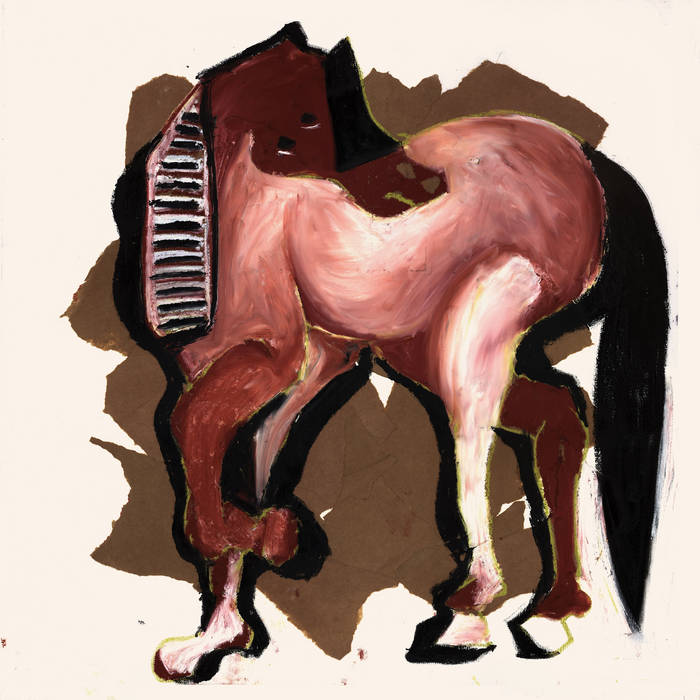
Old 97’s- American Primitive (ATO)
Old 97’s have been a bell-weather band in the alternative country and Americana scenes for as long as those very scenes have existed. Their thirteenth proper set, American Primitive, launches the group’s fourth decade in the industry, and does so with all of the signature gusto, grit, and gravity that have defined their music from the onset. This is exemplified by the first biting line to emerge from band leader Rhett Miller’s trembling voice: “You’ve got to dance like the world is falling down around you…because it is.” Emoted against a morose but intoxicating riff of twangy turbo rock, it sets the stage for a record that for the next forty minutes will both confront the troubles of the times, while also providing plenty of means to escape those realities. Miller’s bark is as chilling and confident as it’s ever been, and the same can certainly been said for the remaining 97s. The musicianship throughout is an expectedly vibrant blend that is loose and precise all at once, as the group passionately rips through a bevy of ripping sessions covering everything from pure rock and cow-punk to surf, rockabilly, and contemplative folk. Topically, it addresses a platter of different conflicts, whether it be those with romance, inner-demons, or concerns with the toxic state of 2020s America. Dashes of charming, flirtatious novelty like “Honey Pie” or the spooky sex appeal of “By the End of the Night” add a smart dose of levity and balance to the project, as does the lovely Tex-Mex accents of “Estuveria Cayendo”, the instrumental that closes the record on a gorgeously restrained note. American Primitive is a roots rock treasure, a richly diverse showcase of a veteran band whose ability to entertain and evolve is as fresh and vital as ever.

Katie Pruitt- Mantras (Rounder)
Katie Pruitt’s outstanding debut album, Expectations arrived a month before the entire world was shut down for the COVID-19 pandemic. It was hardly an ideal time to launch your first release as a new recording artist, but it turned out that Pruitt’s brand of thoughtful folk-rock proved to be a suitable source of comfort, wisdom, and insight during such a turbulent world event. Four years later, Pruitt finally delivers her sophomore effort and it only builds on the multitude of artistic strengths that she demonstrated in droves on the first go-around. Her voice is even more piercingly beautiful and her warm sonic blend of folk, pop, rock, and country is even more richly textured. And then there’s the songs themselves, a uniformly excellent collection of compositions that displays wisdom, empathy, and gravitas far beyond her years. Or truthfully, this is the emotional range of a young woman who had to come of age during the viscously complicated past ten years, not to mention after a childhood trapped between a religious upbringing and a queer identity. All of this once again informs the narratives Pruitt blesses us with throughout Mantras. She is unafraid to explore her inner-most battles, nor does she shy away from the social injustices that divide our society, transform and threaten our relationships, and define our times. (“Blood related…and trying to relate”? Wow. “The Waitress”? “Standstill”? They made you weep too, right? ) Her ability to do all of this while retaining the strong semblance of unifying grace that she does is likely her most impressive accomplishment. Mantras is an undisputed sophomore success, and Katie Pruitt further solidifies herself not just as an important artistic voice for the future, but just an important human voice in general.
Enjoying our content? Follow us on Facebook and subscribe by clicking below!
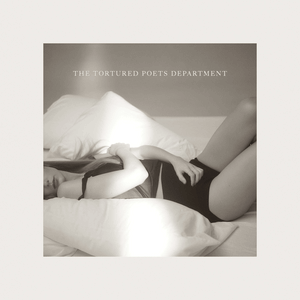
Taylor Swift- The Tortured Poets Department (Republic)
Over the course of popular music history, it has become increasingly rare to find both a generational pop icon and a generational songwriter within the same artist. Taylor Swift has obviously proven to be a dramatic exception to that rule. Her reputations as a larger-than-life star and a prolifically poetic songwriter have never been more prominent. Her eleventh album, The Tortured Poets Department unequivocally places its sole focus on the compositional half of that potent combination. This is important for both Swifties and general music fans alike to consider as they approach this record. Such a stylistic move is dramatic exercising of the artistic license and immunity that a star of Swift’s magnitude has at her disposal. For her to follow-up a glitzy, box-office phenomenon on the history-making scale of the Eras Tour with such a sparse and confessional record would be a self-destructive risk for most artists. It makes Bruce Springsteen’s infamous follow-up of his mid-80s Born In the USA domination with Tunnel of Love seem subtle in comparison. There is not an immediately accessible pop anthem to be found anywhere on TTPD. It makes 2020’s fabulous Folklore/Evermore twofer sound like 1989, part deux. However, what you will find is Swift’s most revelatory collection of songs to date. In some ways, it feels like we’re truly peering into her diary for the first time; another remarkable statement given the staggering anecdotal nature of her entire preceding canon. Sonically, it may seem painfully cohesive. But it’s hardly different than any of the folk or Americana classics we revere; merely swap the acoustic guitar for tempered Midnights-recalling synth and electropop undertones. This is a liner notes record. It reveals its deepest rewards after repeated listens and time spent devouring its lyrics. And upon that investment, the fortunes are plentiful. You’ll find the world’s biggest superstar offering us the most harrowing, hilarious, ferocious, cunning, vindictive, and vulnerable lyrics of her career. Collaborations with Post Malone and Florence + the Machine are expectedly dazzling in all of their dark despair, while the embattled and naked nature of cuts like “My Boy Only Breaks His Favorite Toys”, “Who’s Afraid of Little Old Me?” and “The Smallest Man Who Ever Lived” redefine what the cathartic heights of a Swiftian break-up tune look like. Most alarming however, particularly given the ridiculously successful year she just logged, is “I Can Do It With A Broken Heart”. It’s a raw and tragic portrayal of the heights of superstardom, from a woman who has reached a pinnacle of industry success a scant few others have before her. This record is indeed both poetic and tortured. It’s not intended to be the most aesthetically accessible record of her career, and it isn’t. Rather, it aims to be one of her most emotionally and lyrically bountiful bodies of song craft. And, that it damn sure is.

Vampire Weekend- Only God Was Above Us (Columbia)
Only God Was Above Us marks the end of another half-decade slumber for Vampire Weekend, a group that was easily one of the biggest indie success stories of the early days of the social-media age. Their 2019 predecessor, Father of the Bride, proved to be their most dense and critically triumphant release to date. This follow-up certainly follows in that record’s footsteps, but with a much tighter run-time and looser framework, this time inspired by the spirit of a pre-9/11 New York. It’s important to remember that even in their primitive days, VW was always a band teetering on the edge between charming indie nerdiness and sophisticated sonic complexity. It’s that fascinating dichotomy that will ultimately always be their most entertaining aspect. You could spend your first several listens of this album just digesting all of the glorious stylistic whiplashing at hand. It’s a chaotic but brilliant kaleidoscope of sound that incorporates broad swaths of classical, jazz, chamber orchestra, baroque pop, electronica, Cosmic rock, choral music, and plenty more. The dynamic, quirky personality of lead vocalist Ezra Koenig remains uniquely qualified to meld all of this beautiful mania together, providing a lovely, melodic poignancy and understated conviction to the thoughtfully introspective topics that await the listener underneath it all. Koenig tackles the cultural stakes he sings about with the same effervescent soul he always has, but with the evolved lens of a man inching toward 40. As illustrated especially on the record’s epic closer, “Hope”, he has further learned what conflicts of the past to let go of, and which to tackle with an even greater level of significance than ever before. Only God Was Above Us is a beautiful and unmitigated aural wonder. It’s a feast for the ears and the mind, from a group whose vibrant creativity and unique vision remains unparalleled across all artistic spectrums.
Enjoying our content? Follow us on Facebook and subscribe by clicking below!
 The 706
Good post.I subscribed. Have a happy day🍀☘️✨⭐️
Thanks for reading! Glad to have you as a subscriber!