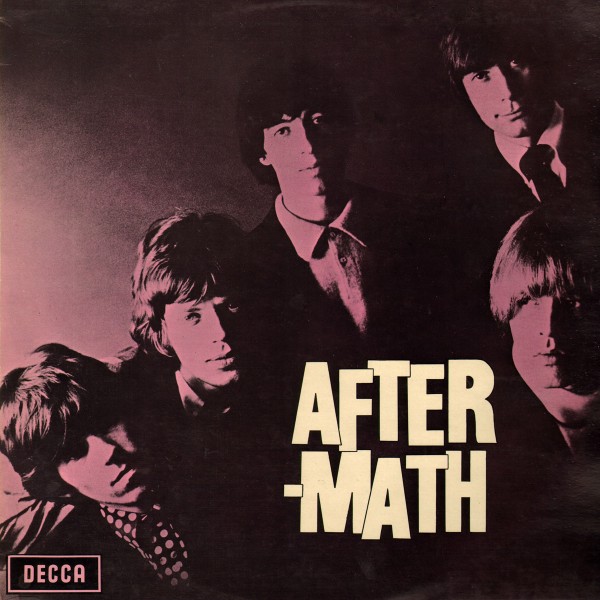
The Rolling Stones, Aftermath, 1966
Label: Decca
Producer: Andrew Loog Oldham
After slowing building upon their musical roots and influences over the period of their first three albums, The Rolling Stones released what proved to be their commercial and artistic breakthrough with the arrival of Aftermath in 1966. By this point, the burgeoning band had carved out a foothold on both British and American radio with hits like “Get Off of My Cloud”, “19th Nervous Breakdown”, and what would become a signature song with the 1965 smash, “(I Can’t Get No) Satisfaction”. Capitalizing on that success, Aftermath finds Mick Jagger and company taking tremendous creative liberties. It was their first long-player to consist solely of self-written material from the collaborative pen of Jagger and guitarist Keith Richards, and also challenged the convention of an album’s duration, clocking in at over fifty minutes. To compliment that new narrative freedom, the band also followed the lead of fellow Brit superstars The Beatles and that group’s recent expansion of sound, by fusing their original blues-rock blend with a wide array of worldly instruments and sonic arrangements.
The eye-opening revelations start right from the get-go with the sounds of the Oriental-tinged number, “Mother’s Little Helper”, which boasted some of Richards’ most unique guitar arrangements to date thanks to a 12-string/slide combination. The song itself was an incredibly topical and progressive song, especially for the time, as it chronicled a housewife’s dependency on prescription pills to get through the busy, yet lonesome days of domesticity. The controversial, yet captivating tale demonstrated the depths that the Stones would begin to explore with their songwriting, and the fact that it was catchy as hell only added it to their growing list of radio successes. It’s another breakthrough moment for Jagger, so frank and biting is his delivery as he pulls the curtain back on the supposed bliss of suburbia: “Doctor, please! Some more of these! Outside the door, she took four more. What a drag it is getting old!”.
Intriguing feminine portraits of varying tone color much of the album as it proceeds. “Stupid Girl” plays like a deliriously romping yet degrading rip at the narrator’s lover, while the signature cut “Under My Thumb” has an almost snarling misogyny embedded in its lyrics, and the fact that it was within the trappings of a full blown rock anthem made it all the more stunning. Chauvinistic it may have been, “Thumb” is the definition of a killer record that still sounds as fresh and intoxicating today as it did a six decades ago. While never released as a single, despite being just as in tune with the hot radio sounds of hits like “Satisfaction”, it nevertheless became one of their definitive anthems. Meanwhile, “Lady Jane” proved to be another pivotal performance that turned the POV tables entirely, with Jagger’s mysterious yet emotive singing pledging nothing but complete doting and devotion to the woman he loves.
While the record finds the ensemble continuing to evolve into one of mainstream rock & roll’s most prominent groups, the bluesy undercurrent from which they came on previous outings is not completely abandoned. It’s merely flavored with an increasingly original take as a result of both sonic curiosity and their venture away from cover material. Tracks such as “Doncha Bother Me” and “Flight 505” retain the sweaty, brooding blues sound that they had excelled at from the very beginning. A noteworthy detour from the time conventions of any popular music record, the 11-plus minute jam “Goin’ Home” took those blues influences to the next level. While there’s no questioning the pure technical competence of the performance, it essentially takes forever to go nowhere narratively, a slight lapse in brevity that really only Bob Dylan was getting away with at that point in time. While definitely a credit to the band’s ambition, their execution of such performances would improve over time.
In addition to the blues, other stylistic roots are explored throughout Aftermath, including the pensive folk intuitions of “I Am Waiting”, the 50s tinged doo-wop of “What to Do”, the bright pop jangle of “Think”, the brimming soul of “Out of Time”, and the country & western samplings of “High and Dry”, which proves to be a beguiling blend of honky tonk & rootsy jug-band stylings. Just as Jagger deftly adapts from style to style vocally, so does the bewildering guitar work of Richards, whose tremendous licks navigate each genre with ease, recalling classic sounds of the past while also forecasting future subgenres like punk and garage rock via his bold and precise picking.
Perhaps the true hidden hero behind the genius of Aftermath however is usual guitarist Brian Jones, who on this outing focuses on introducing a whole new onslaught of alternative instrumentation to the group’s repertoire. Taking his lead from the revelatory heights of the Beatles’ Rubber Soul the previous year, Jones brings everything from sitar and dulcimer to marimbas and harpsichord to the drawing board. The intriguing results find rock & roll and blues naturally residing side by side with obscure, baroque pop and Eastern touches as if they were always meant to. Consequently, Aftermath not only served as an individual breakthrough, but also one of the key albums in laying down the roots for a more worldly brand of rock music, one that paid little mind to the cultural barriers and conventions of the past.
With Aftermath, and subsequent singles surrounding it such as the forthcoming classic “Paint It Black”, the Rolling Stones definitively emerged as one of the most important acts in the exploding musical landscape of the mid-60’s. Their blues roots had always set them apart from their British Invasion counterparts. However their ability on this record to showcase such a deep, far-reaching scope of originality and forward thinking announced with conviction that they would be major players for the long-term. It’s one of those classic albums where the previous potential of a talent is triumphantly fulfilled with the creative results of their labor. It’s the first of many essential Rolling Stones records to come.
Track Listing:
- “Mother’s Little Helper” (Mick Jagger, Keith Richards)
- “Stupid Girl” (Jagger, Richards)
- “Lady Jane” (Jagger, Richards)
- “Under My Thumb” (Jagger, Richards)
- “Doncha Bother Me” (Jagger, Richards)
- “Goin’ Home” (Jagger, Richards)
- “Flight 505” (Jagger, Richards)
- “High and Dry” (Jagger, Richards)
- “Out of Time” (Jagger, Richards)
- “It’s Not Easy” (Jagger, Richards)
- “I Am Waiting” (Jagger, Richards)
- “Take It or Leave It” (Jagger, Richards)
- “Think” (Jagger, Richards)
- “What to Do” (Jagger, Richards)

