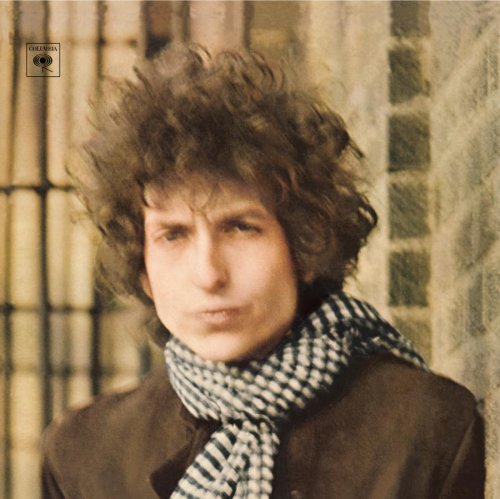
Bob Dylan, Blonde on Blonde, 1966
Label: Columbia
Producer: Bob Johnston
After making rock history the previous year with the landmark album, Highway 61 Revisited, widely regarded as one of the greatest albums ever released, Bob Dylan continued on with his maverick ways in 1966 by following it up in epic fashion with the groundbreaking Blonde on Blonde. A sprawling double album (still a rarity at that time), the ramshackle masterpiece found the enigmatic superstar employing a change of scenery to bring the project to fruition. After initial recording sessions in New York City didn’t prove fruitful, Dylan packed up his band and producer and moved the proceedings down to Nashville. A prelude to Dylan’s flirtation with country-rock and the Music City community later in the decade, the resulting album demonstrated that such a change in location undoubtedly yielded greater creative inspiration. Surrounded by some of the most astute Nashville session musicians of the time, the performances here find the singer-songwriter further building upon the amplified folk-rock sound that had reached a fever pitch on 61, by expanding even further into a variety of sonic settings and mysterious aural narratives.
Take the opening cut, and surprise #2 radio hit, “Rainy Day Women #12 & #35” for instance. Combining boozy brass-band jamming and old-timey pop with his now signature folk-rock quirks, the song melds into a thick and bizarre concoction of sonic wonders that undeniably works. It’s a trippy, irresistibly joyous performance no matter what your interpretation of the lyrics may or may not be, and it set the stage for the continual evolution of Dylan’s musical vision throughout the following album. Just when you thought he had unveiled every seemingly imaginable surprise, he again proved he was just at the beginning of such exploration.
The backbone of the album remained the dense, swampy blues-rock template that had come to define Dylan’s most recent work. It’s peppered here with the brilliant yet subtle touches provided by increasingly frequent comrades like Robbie Robertson, and astute Nashville musicians like Hargus “Pig” Robbins and Charlie McCoy, who were given ample opportunities to show that their musicianship extended beyond their renowned country pedigree. The slow, sweaty churn of Robertson’s guitar riffs combined with Robbins’ classic piano undertones prove a perfect match for Dylan’s slinky Chicago-style delivery on “Pledging My Time”. Elsewhere, the raw roadhouse intensity of “Obviously 5 Believers” is loud, proud and oh, so addictive. Dylan’s rough roar sounds glorious against a backdrop of McCoy’s absolutely blistering harmonica, and Robertson’s guitar licks which burst out of its blues rock shell into full blown hard rock, before that was even a thing. An equally iconic highlight abounds with the slow, sultry spite of “Leopard Skin Pill Box Hat”. With a persistent groove throughout, Dylan begins the song with an impressive guitar intro before allowing Robertson to again take over in spitfire fashion, allowing Bob to focus on delivering one of his most wry and clever indictments of a cheating lover: “I don’t mind you cheating on me, but I sure wish he’d take that off his head”. It was clear at this point that this former folk savior had now clearly mastered old-school blues and melded it into red-hot rock magic.
Perhaps even more impressive however is the amount of balance and range Dylan exhibits throughout the record, a key component to the success of any album, especially one of this length. With “One of Us Most Know (Sooner or Later)”, he addresses the root causes of a breakup with both frank honesty but also acceptance. This bubbling release of emotions is brought to vivid life thanks to an exquisite wall of production that highlights layers of guitars, harmonica and lilting organ riffs. He’s rarely sounded so effortlessly gleeful than on the fleeting folk-pop of “I Want You” which imagines the early excitement of a new relationship. Bright, sparkling, and infectious are rare adjectives to accompany a Dylan record. But the high toned keys of this romp achieve just that, while somehow still fitting in perfectly with the deeper tracks surrounding it. Proving to be even more thrilling in this regard is “Stuck Inside of Mobile with the Memphis Blues Again”, a stomping mouthful and a rapturous sonic delight. The production and playing is so clever and crisp, and another sterling example of what an exodus into new and fresh sounds his journey to Music City proved to be.
He returns to his more reflective folk side in grand fashion on the classic seven minute sprawl of “Visions of Johanna”, an oblique and hypnotic portrayal of a man desperately torn between the love of two different women. “Just Like A Woman” appears on the surface to be a pensive and reflective romancer. But as is always the case with Dylan, there’s more going on underneath, with his classic folk colloquialism providing more questions than answers. However, there’s ultimately no mystery as to his message in “Sad Eyed Lady of the Lowlands”, an 11 minute opus which occupied all of side four of the original record. Written in tribute to his new wife, “Lowlands” offers a stripped down folk sound with very subtle electric organ accompaniment, and while the lyrics remain mysterious and spell-binding, it lacks the bite and defiance of the earlier numbers. Subdued and romantic, this is Dylan in love in his own way, and it’s beautiful and captivating to hear this rarely-revealed side of the artist. And in classic Dylan irony, it returned listeners to the sparse sound that they first latched onto, all while concluding an album that boasted his biggest and most ambitious sound yet.
Like the entirety of his catalog, Blonde on Blonde is a stunning revelation of new musical wonders each time you listen to it. It may take time for the record to grow on you, but each listen proves more rewarding than the previous. And while Bob Dylan has continued to forge the exploratory path celebrated here in the more than half-century that has followed, there’s good reason this is often cited as arguably his greatest moment on record. The manner in which the lyrics, performance, production, and exemplary musicianship all come together remains gloriously astounding. And even if this record is passed over in favor of another for the distinction of Dylan’s greatest masterpiece, it’s rather safe to say that no other album has showcased his groundbreaking vision on a grander or more dramatic scale than Blonde on Blonde.
Track Listing:
- “Rainy Day Women #12 & 35” (Bob Dylan) *Single Release 1966
- “Pledging My Time” (Dylan) *Single Release 1966
- “Visions of Johanna” (Dylan)
- “One of Us Must Know (Sooner or Later)” (Dylan)
- “I Want You” (Dylan) *Single Release 1966
- “Stuck Inside of Mobile with the Memphis Blues Again” (Dylan)
- “Leopard-Skin Pill-Box Hat” (Dylan) *Single Release 1967
- “Just Like A Woman” (Dylan) *Single Release 1966
- “Most Likely You Go Your Way and I’ll Go Mine” (Dylan) *Single Release 1967
- “Temporary Like Achilles” (Dylan)
- “Absolutely Sweet Marie” (Dylan)
- “4th Time Around” (Dylan)
- “Obviously 5 Believers” (Dylan) *Single Release 1966
- “Sad Eyed Lady of the Lowlands” (Dylan)

